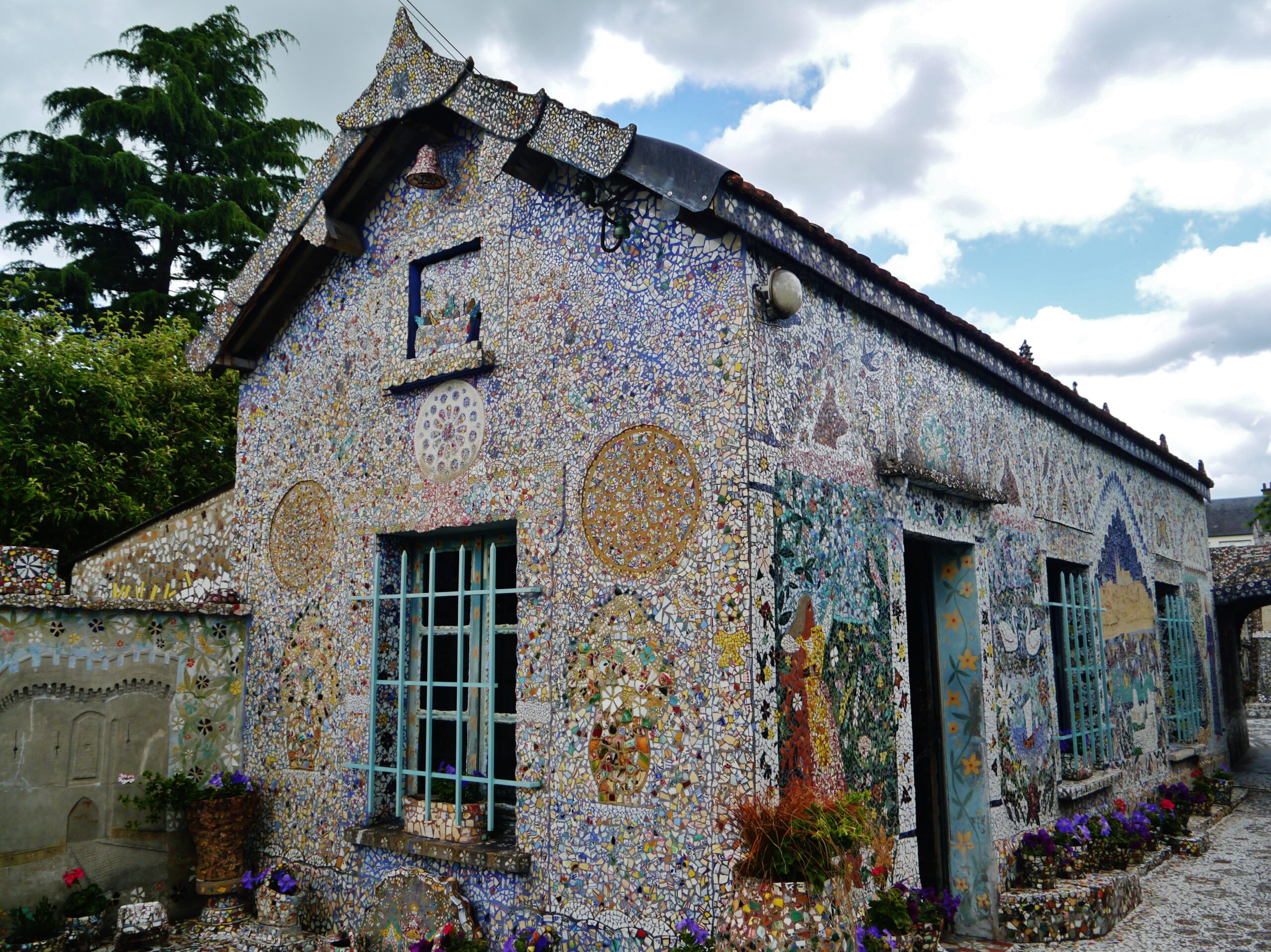
As a passionate for showing foreigners a side of France beyond the Eiffel Tower and croissants, I’ve found few places as enchanting and unexpected as La Maison Picassiette in Chartres. Tucked away at 22 Rue du Repos, this isn’t just a house—it’s a kaleidoscope of broken ceramics and glass, a testament to one man’s imagination, and a secret I can’t wait to share with you. Let me take you on a personal journey through this quirky masterpiece, where every shard tells a story.
A House Like No Other
I first stumbled upon La Maison Picassiette a few years ago, on a quiet afternoon when I decided to stray from the usual path of Chartres’ gothic cathedral (yes, it’s stunning, but there’s more to this town!). What I found was a house that looked like it had been dipped in a mosaic dream. Walls, floors, furniture, even the garden—every inch sparkled with fragments of shattered plates, cups, and glass, pieced together over 30 years by its creator, Raymond Isidore. From 1938 to 1962, he turned his modest home into a wonderland of art brut—raw, unpolished, and utterly captivating.
Imagine this: 29,000 hours of work, 4 million pieces, and 15 tons of discarded bits transformed into something magical. It’s not the polished grandeur of Versailles, but that’s exactly why I love it. This is France unfiltered, a place where creativity thrives in the cracks of everyday life.
Meeting Raymond Isidore, the “Picassiette”
Raymond Isidore wasn’t an artist by trade—he was a municipal worker, a road mender, and later a cemetery sweeper. Born in 1900 into a humble family, he had no formal training, just a quiet determination and a habit of collecting broken things. The locals nicknamed him “Picassiette,” a playful jab at his scavenging ways (“piquer des assiettes” means “to steal plates” in French), though some say it’s a nod to Picasso himself. I like to think it’s a bit of both—there’s a rebellious, artistic spirit here that feels timeless.
What strikes me most about Raymond is how personal this place feels. He started decorating in 1938, after building the house in the 1930s with his wife Adrienne. It began with a multicolored tile floor, then spiraled into an obsession. He’d wander fields and dumps, gathering shards, and spend nights under a kerosene lamp, piecing together mosaics inspired by his deep faith and the world around him—think Christian scenes, animals, and even a quirky take on the Chartres Cathedral. When he passed away in 1964, just shy of 65, he left behind a legacy that’s as much about heart as it is about art.
Stepping Into a Mosaic Wonderland
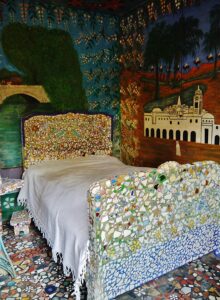
Walking through La Maison Picassiette feels like stepping into Raymond’s mind. The main house is a riot of color—walls plastered with scenes from postcards, furniture gleaming with embedded glass. Then there’s the chapel, built between 1953 and 1956, where crosses and madonnas mingle with rural motifs. I always linger in the Cour Noire, a dark courtyard with a sweeper’s tomb and a throne, a nod to his old job that’s both eerie and poignant.
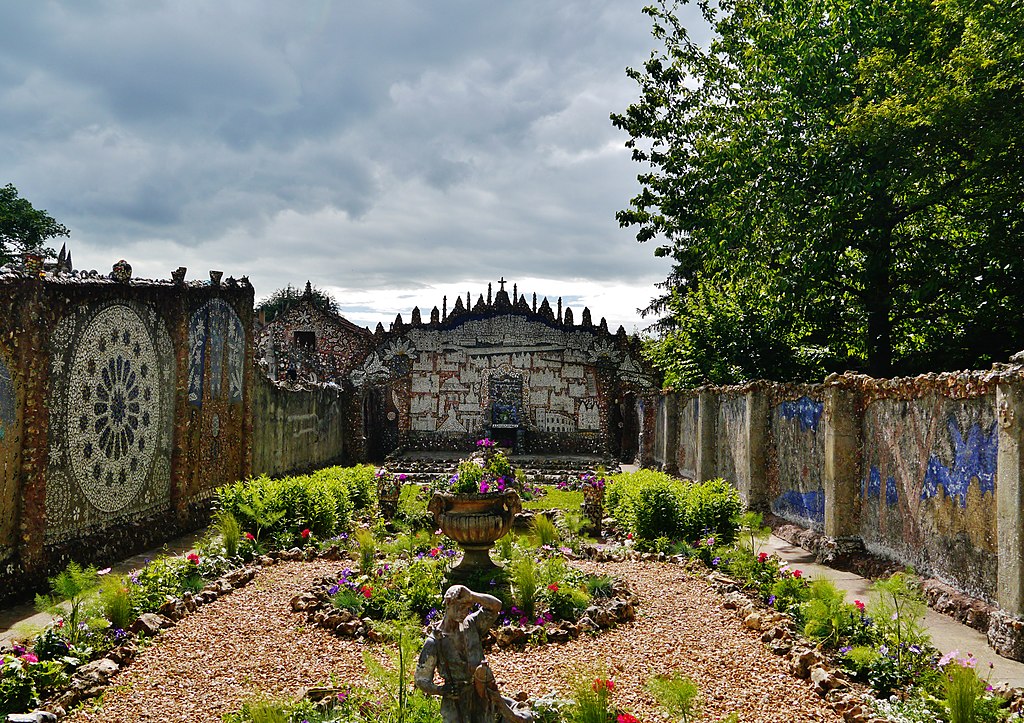
The garden is my favorite, though. The Jardin du Paradis has flowerbeds framed by mosaics, a little basin, and a blue throne that feels like it’s waiting for a king—or maybe just for Raymond to sit and dream. His last creation, the Tombeau de l’Esprit, finished in 1962, is a celestial blue tribute to the heavens, with pious inscriptions that make you pause. It’s raw, it’s strange, and it’s beautiful in a way that glossy tourist traps can’t touch.
Why I Bring Visitors Here
I love talking of La Maison Picassiette because it’s a France most people don’t expect. It’s not about luxury or history books—it’s about one man’s soul spilling out into his home. Now a museum, it’s open from March to November (check the official site for times—usually 10:00-12:30 and 14:00-18:00, closed Tuesdays), and for about €6.50, you can wander through with a guide who’ll bring Raymond’s story to life. I’ve seen jaws drop when people realize this isn’t just “folk art”—it’s a masterpiece recognized as “Contemporary Remarkable Architecture” by France’s Ministry of Culture in 2017.
Plus, it’s a chance to see Chartres differently. The cathedral gets all the attention, but this house, just a short hop from the center, shows the town’s quirky, human side. Pair it with a coffee in Saint-Chéron, and you’ve got a day that feels authentic, not staged.
A Little Secret to Take Home
Here’s my insider tip: don’t rush. Let the mosaics sink in—the wonky Joconde, the tiny cathedral in 3D, the oddball charm of it all. And if you’re lucky enough to visit during the Journées Européennes du Patrimoine, you might catch a rare nighttime tour. It’s like seeing Raymond’s world glow under the stars.
La Maison Picassiette isn’t perfect or polished, and that’s why it’s special. It’s a reminder that beauty can come from broken things, and that France is full of surprises if you’re willing to look. So next time you’re near Chartres, skip the usual script and let me—or this house—show you something real. You won’t forget it.