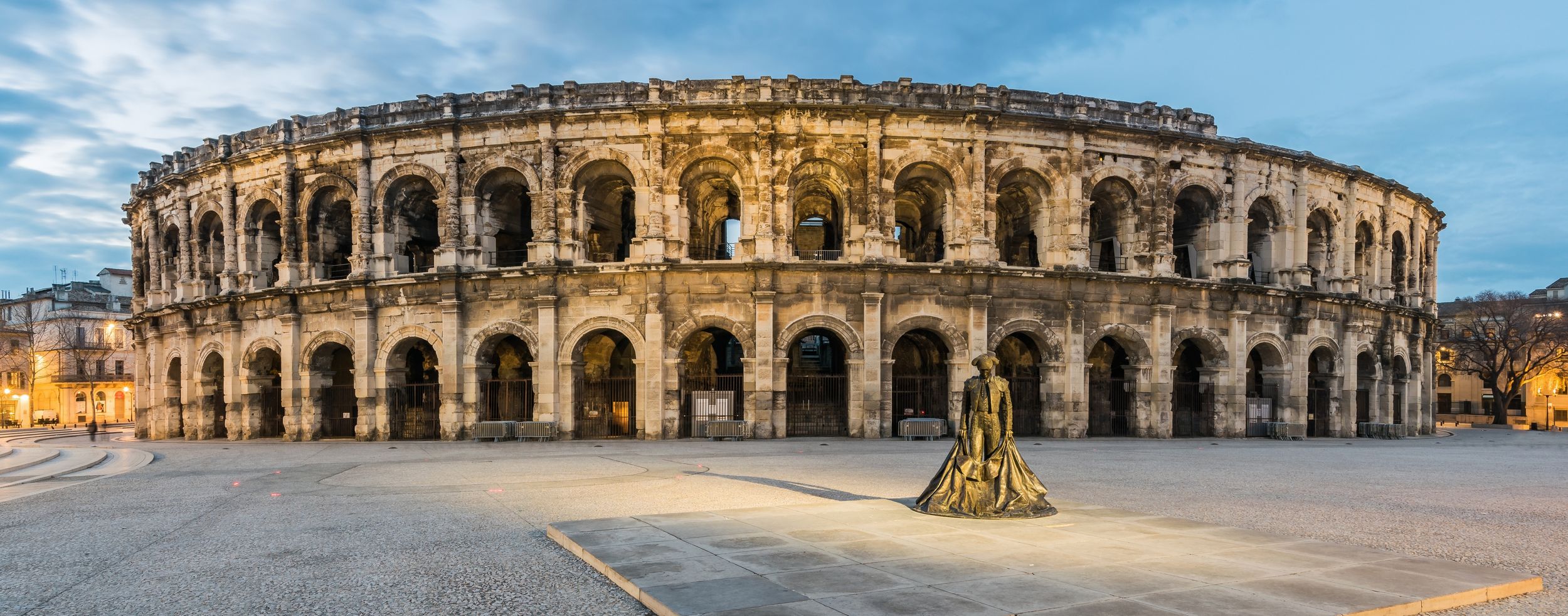
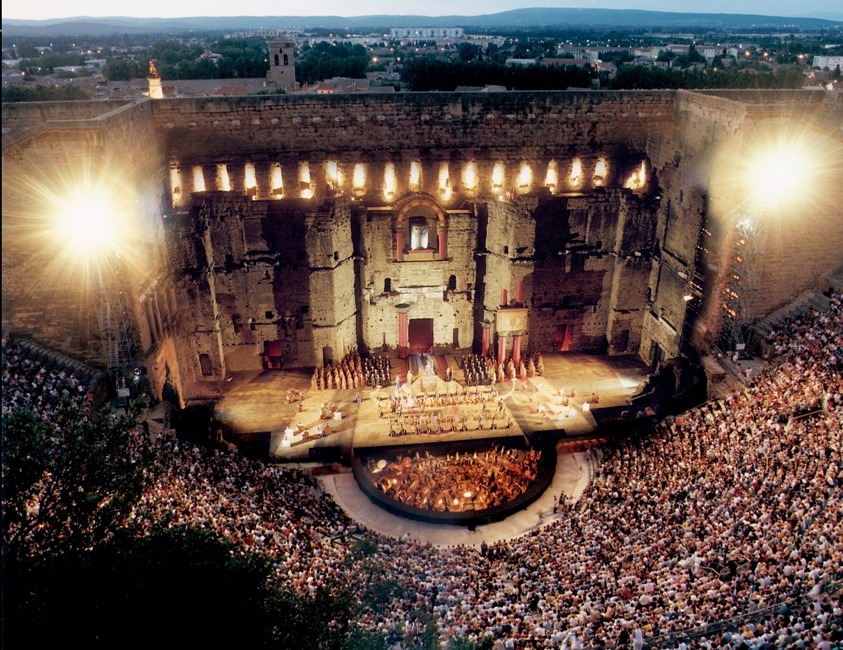
As I stepped through the gates of the Ancient Theatre of Orange in France, I felt like I was being transported back in time. The stones, worn by centuries, seemed to whisper secrets of bygone eras. This Roman theater is not just a monument; it’s a soul-stirring experience that captures both history enthusiasts and casual travelers alike.
Situated in the heart of Provence, this UNESCO World Heritage Site stands as one of the best-preserved Roman theaters in Europe. Built during Emperor Augustus’ reign around 27 BC to 14 AD, its grand stage wall—standing an astonishing 37 meters (121 feet) high—makes it one of Europe’s largest ancient monuments still intact. Restored in the 19th century by Prosper Mérimée and fitted with a protective glass canopy in 2006, it showcases a blend of ancient craftsmanship and modern preservation efforts.
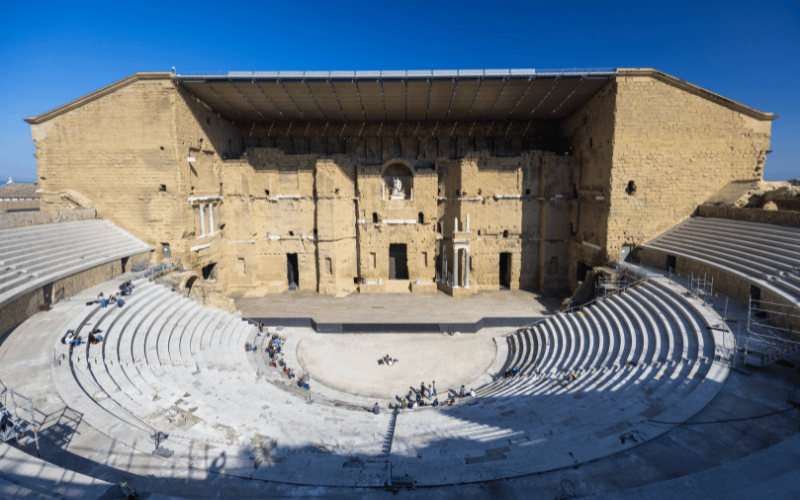
As I walked up through its tiers, built cleverly into a hill for natural acoustics, I couldn’t help but imagine how they would have looked filled with 9,000 spectators eager for drama or public speeches over two millennia ago. Today, the theatre remains alive with performances, especially during the warm summer nights of the Chorégies d’Orange festival, established in 1869. This event features opera and classical music, with 2024 highlights including Puccini’s “Tosca,” starring Aleksandra Kurzak, Roberto Alagna, and Bryn Terfel, often broadcast on television (Chorégies d’Orange Festival).
The backdrop is awe-inspiring: sculptures etch intricate stories while towering columns frame vibrant sunsets—a perfect harmony between nature and human craftsmanship. By day or night, the atmosphere invites reflection on our shared human history, with each stone echoing voices from ages past.
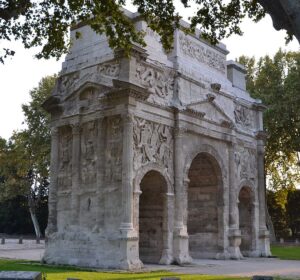
For those seeking unique anecdotes, did you know that beneath the seats lie corridors used by actors to quickly change costumes or for other clandestine operations? Additionally, in 1925, ruins of a temple dedicated to the imperial cult of Augustus were discovered nearby, offering an unexpected archaeological layer to explore (History Hit – Roman Theatre of Orange).
Yet, what truly elevates visiting Orange beyond mere sight-seeing is the sense of connection to our cultural heritage. It’s not just architecture; it feels like a bridge to the past, preserved for future generations.
Practical Information
The theatre is open year-round, with detailed guided tours and audio guides available in 10 languages, including French, English, Italian, German, Portuguese, Spanish, Dutch, Japanese, Chinese, and Russian. You can book your ticket at theatre-antique.com. Entry includes access to the museum of art and history. Note that tariffs increase by €1.50 on days with performances, typically in July and August. It’s easily accessible by car via the A7/A9 highways or by train from Avignon, just 29 km away . Check the website for the latest event schedules to ensure you capture the magic firsthand.